Ranthambore: National Park – Tiger Reserve
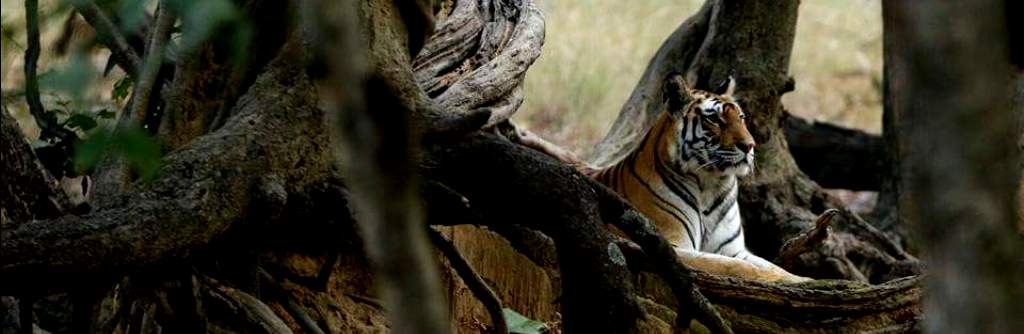
Ranthambhore Wildlife Sanctuary
If you want to see the tiger in the Jungle, eastern Rajasthan offers one of the best opportunities in India. Only about 130 km from Jaipur, and therefore easy to combine with a visit to the “Pink City”, lies one of the largest and most famous national parks in northern India: the Ranthambore National Park. The area of today’s park once served the Maharajas of Jaipur as a hunting ground and owes its name to the mighty “Ranthambore Fort” from the 10th century, perched high on a rock. Officially declared a national park in 1980, the 392 km² park today provides habitat for a variety of different animal species. With a little luck, you can see sloth bears, mongooses, swamp crocodiles, langurs, hyenas, sambars or leopards on a safari, in addition to about 270 different bird species. Also some of the oldest banyan trees in India are located on the grounds of the park. However, the main attraction is the Bengal tigers, which form one of the largest tiger populations in India with around 40 adult animals. Since Ranthambore became one of the first national parks to join “Project Tiger”, the park administration has taken the special needs of these shy predators into account here more consistently than anleywhere else. With success, as the no less than 18 counted cubs in 2011 prove. The chances of actually seeing a tiger here are therefore significantly better than in other parks. In addition, the park offers a magnificent, varied landscape that will quickly make you forget the hustle and bustle of Indian cities. Between massive rock formations, lakes, vast grasslands, ruins from long ago and impenetrable jungle, you feel transported to Kipling’s “Jungle Book”. Access to the park is strictly regulated and reserved exclusively for the park’s jeeps and trucks. Safaris depart early in the morning and afternoon and last approximately 3 hours each. As only a limited number of vehicles are allowed in each of the park’s 7 zones per day, and some of the zones are more suitable for tiger sightings than others, depending on the time of day, it is advisable to book well in advance, depending on the season. Most animals are seen during the hot season from March to June, when they come out of the undergrowth in search of water. But also the months from November to March are well suited and climatically more pleasant. In the winter months it is advisable to bring warm clothes (if necessary even scarf and gloves), because it can be very cold in the early morning hours in the open vehicles and there are only country roads in the park, which makes the safaris a bit dusty. Therefore sunglasses are also recommended.
Note: During the monsoon season from 01 July to 30 September, the park is closed for visitors.